Home/Remodeling/Painting
Painting
Walls, ceilings, trim, doors, cabinets, siding and brick, sprayed or rolled.
What Gets Painted
Every remodel ends in paint. Paint on its own is a common job.
- Interior walls, ceilings, trim, doors and closets, sprayed or rolled.
- Cabinet painting in a sprayed lacquer or enamel finish.
- Exterior siding, trim, doors, shutters, garage doors and porch ceilings.
- Brick: paint, limewash or masonry stain.
- Drywall repair and texture before paint.
- Stain and clear coat on beams, mantels, railings and front doors.
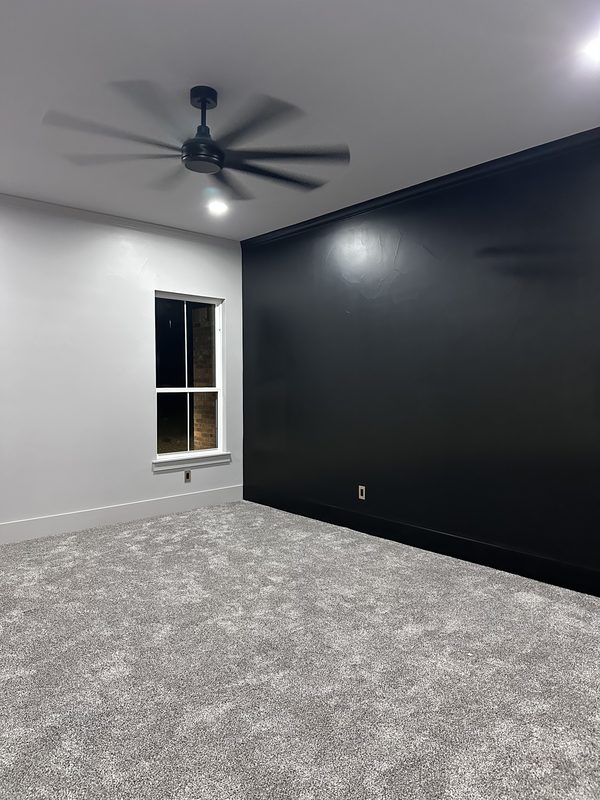
- Accent walls, two tone trim, and ceilings painted a color other than white.
Painting is one of ten services on the remodeling overview for Fort Worth and DFW.
Prep and Products
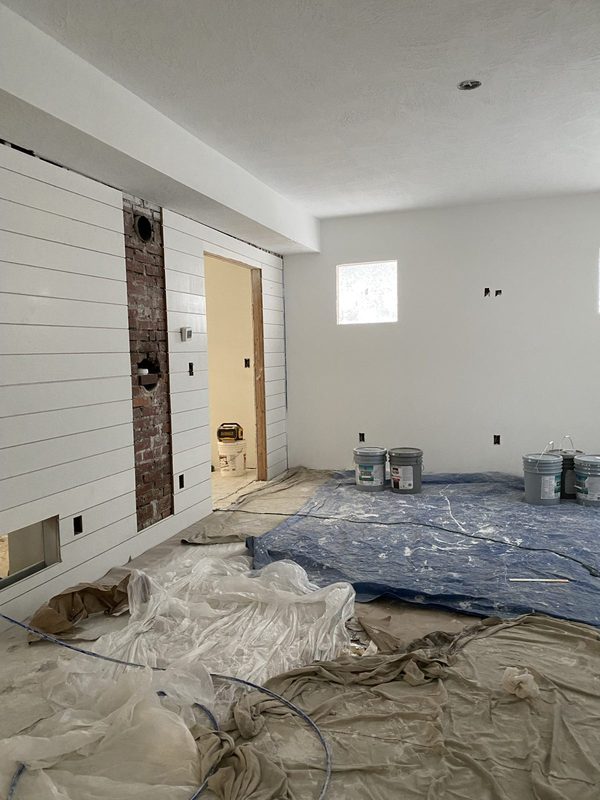
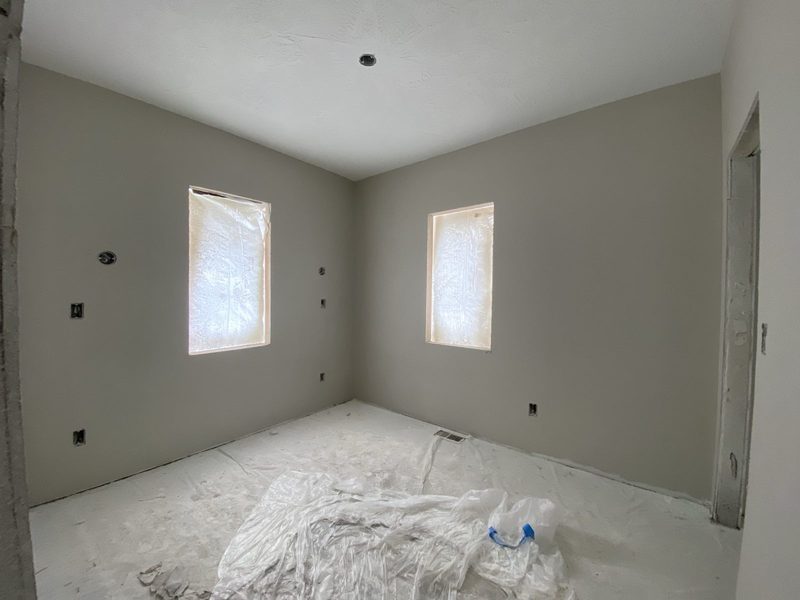
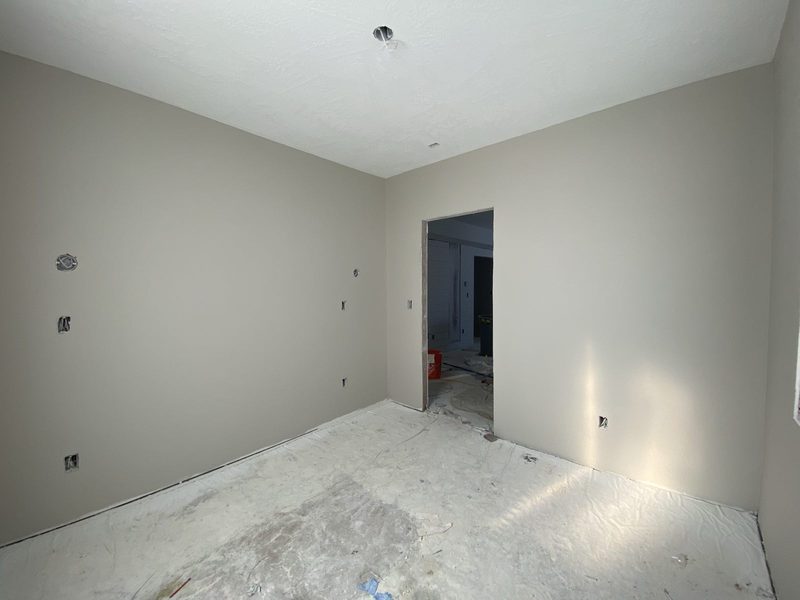
Interior prep fills every nail hole and dent, sands the patches, caulks the gap between trim and wall, and primes anything patched or changing color by more than a couple of shades. Ceilings are painted first, then walls, then trim. Walls get two coats, not one thick coat. When there are more than a few doors, they come off and are sprayed flat. Hardware goes back on clean, not painted over.
For walls in a lived in house the usual spec is Sherwin-Williams Emerald Interior. It scrubs without burnishing. Owners who want a Benjamin Moore color get Regal Select Interior in the same sheen plan. Walls in a house built before 1978 fall under the EPA lead-safe rules for sanding and scraping.
Cabinet Painting
Painting cabinets changes a kitchen without replacing it. The doors and drawer fronts come off and go to a spray setup. The boxes are cleaned, scuffed, primed with a bonding primer and sprayed in place with the kitchen masked. A hard enamel or lacquer finish holds up to hands and dishwater. Rolled latex on cabinets peels at the edges within a year. Whether painting or replacing makes sense for a given kitchen is covered on the kitchen remodeling page.
Exterior Paint in the Heat
Exterior paint fails in DFW for two reasons. It went on over chalky, unprimed siding, or it went on at 100 degrees and flashed before it could level. Most exterior paints carry a maker's spec for a surface temperature between 50 and 90 degrees. A west wall in July is past that by early afternoon. Prep is pressure washing, scraping loose paint, sanding the edges, spot priming bare wood and caulking the joints. In summer the sunny sides are painted in the morning. In winter they are painted at midday on a day above 50 with no rain in the forecast. South and west walls get two coats. Trim is brushed. Siding is sprayed and back rolled.
Colors and Sheens
Flat on ceilings. Eggshell or satin on walls in living areas, satin or semi gloss in bathrooms and kitchens where walls get wiped. Semi gloss on trim and doors. Sample pots on the actual wall, looked at in morning and evening light, before the gallons are bought. Whites shift toward yellow or blue depending on the room and the floor color. The way to know is to test on the wall.
Painting is usually the last step of an interior remodel or drywall job, and it is the finish coat on siding and trim replacement.
Job Photos
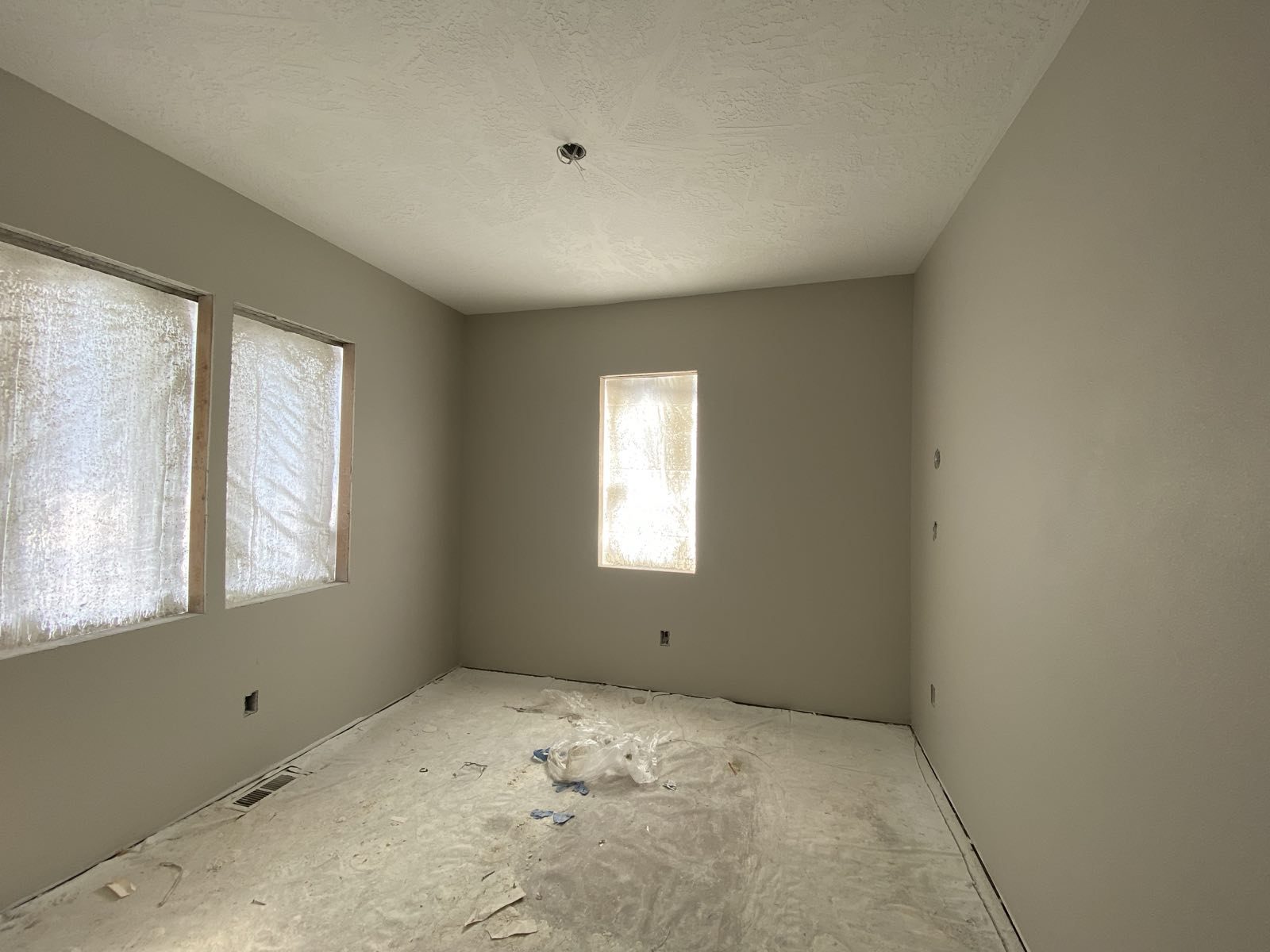
Rooms masked, primed and finished.