Home/Service Areas/Ellis County/Waxahachie Remodeling Contractor
Waxahachie Remodeling Contractor
Six National Register districts on one side of town, 2010s subdivisions on the other.
Waxahachie's Two Housing Stocks
Waxahachie is the Ellis County seat. It was founded in 1850 and incorporated in 1871. The population went from 21,426 in 2000 to 41,140 in 2020. Of roughly 16,800 housing units, 59 percent were built in 2000 or later and 39 percent in 2010 or later. At the other end, 8 percent predate 1950 and another 19 percent date from the 1950s through the 1970s.
The old houses are why Waxahachie calls itself the Gingerbread City. The city has six National Register historic districts: West End, North Rogers Street, Oldham Avenue, Wyatt Street Shotgun House, West Marvin Avenue-Patrick Street, and the Ellis County Courthouse Historic District. Dozens of individual houses on Marvin, Cantrell, Grand, University and Kaufman streets are listed too. These are frame Victorians and bungalows on pier-and-beam with 10-foot ceilings, original millwork, single bathrooms and kitchens added onto the back more than once.
Neighborhoods and Landmarks
On the newer side, confirmed subdivisions include Buffalo Ridge, North Grove and its phases (The Cove, The Estates, The Enclave and The Oaks at North Grove), Garden Valley Farms, Garden Valley Meadows, Garden Valley Ranch, Saddlebrook Estates, Sandstone Ranch, Mustang Creek, Highland Village Estates, Settler's Glen, Gingerbread Village, College Hills and Indian Hills. These are slab-on-grade brick houses from the 2000s and 2010s, mostly single-story or story-and-a-half with open plans.
The Richardsonian Romanesque courthouse on the square, designed by James Riely Gordon, anchors downtown. The 1902 octagonal Chautauqua Auditorium in Getzendaner Park seats 2,500. The annual Gingerbread Trail tours open several of the Victorian homes to the public. Scarborough Renaissance Festival has run southwest of town every spring from 1981. Interstate 35E bypasses the west side, US 287 crosses the north side and US 77 runs through downtown.
Renovating the Historic Houses
A whole-house renovation on a Marvin Avenue Victorian starts with the structure: pier-and-beam leveling, replacing cloth-covered wiring and galvanized supply lines, and repairing rot at the porch and sill. Then the kitchen is rebuilt in the back wing with a layout that connects to the dining room, and a second bathroom is fitted into a former sleeping porch or oversized closet. Original heart pine floors are sanded and finished. Doors, casing, base and transoms are kept or milled to match.
Exterior changes to a contributing house in a historic district go before the city's Heritage Preservation Commission. Interior work does not. Siding, windows and porch details are matched to the period on exterior projects so the house stays in character.
Permits in Waxahachie
The City of Waxahachie Building and Community Services department issues permits through its Permitting Division and the Citizen Self-Service portal. The city has adopted the 2021 International codes and the 2020 National Electrical Code with local amendments. Its permitting applications page publishes submittal guides for residential remodels, additions, accessory structures and commercial remodels.
Work in the Subdivisions
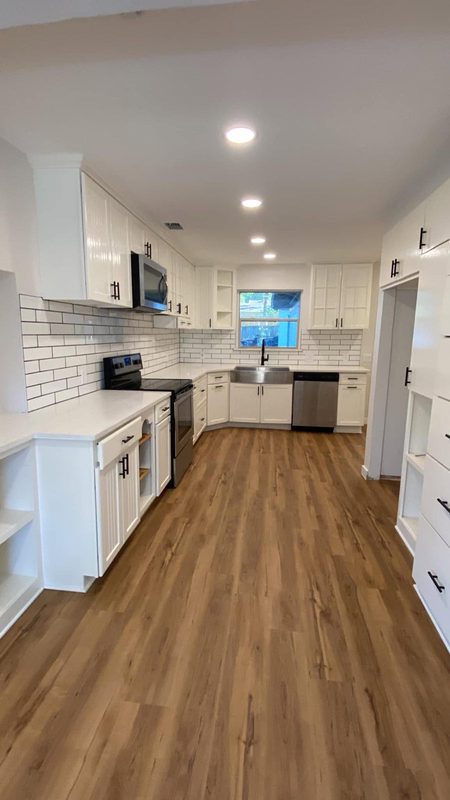
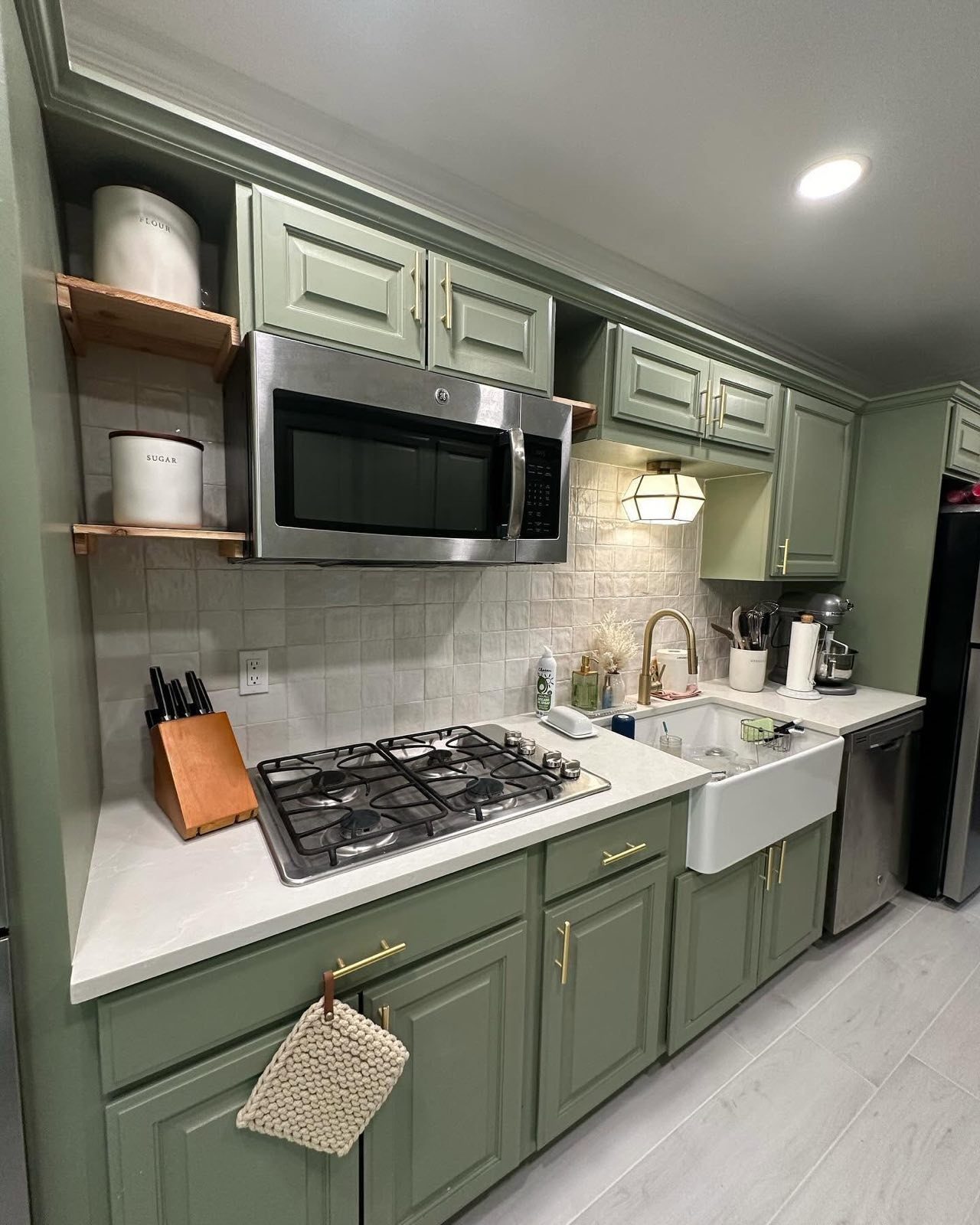
In North Grove or Garden Valley the house does not need structural work. The requests are a kitchen update with quartz, a tile backsplash and painted or new cabinets, a master bath converted from garden tub plus small shower to one large tiled shower, luxury vinyl plank through the main floor, and a garage conversion for a home office or a bedroom for a family member. Covered patios and sunroom additions off the back are the common exterior projects. The Waxahachie Chamber of Commerce is the business group for both the square and the US 287 corridor, where commercial finish-outs go into strip retail and office space.
Other Ellis County Cities
Midlothian. See the Ellis County page for the full list.
Recent Work
Kitchens, bathrooms and interiors across Dallas-Fort Worth.