Home/Service Areas/Dallas County/Grand Prairie Remodeling Contractor
Grand Prairie Remodeling Contractor
Two kinds of Grand Prairie houses, north of I-30 and south of I-20.
Remodeling in Grand Prairie
the city of Grand Prairie sits on the Dallas and Tarrant county line between Arlington and Dallas, with a small piece in Ellis County. It had 14,594 people in 1950, 71,462 in 1980 and 196,100 at the 2020 census. The housing splits in two. About 31 percent was built before 1980, mostly on the north side between I-30 and Main Street. About 39 percent dates from 2000 on, with the 2000s the largest single decade at 23 percent, and most of that is south of I-20 around Joe Pool Lake.
North side neighborhoods include Dalworth Park, Burbank Gardens, Westchester and the Ridgecrest streets near Lone Star Park. South side subdivisions include Lake Ridge, Mira Lagos and Grand Peninsula, with Lynn Creek Park and Loyd Park on the lake. The city was founded as Dechman in 1863 and took the Grand Prairie name when it incorporated in 1909. Grand Prairie ISD serves the Dallas County side, and Mansfield and Arlington ISDs serve parts of the Tarrant County side.
North of I-30: the 1970s and 1980s House
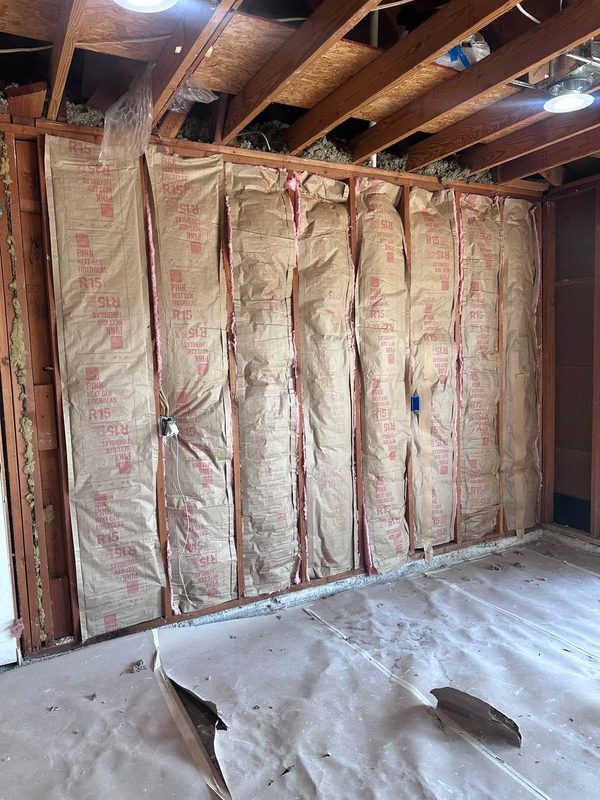
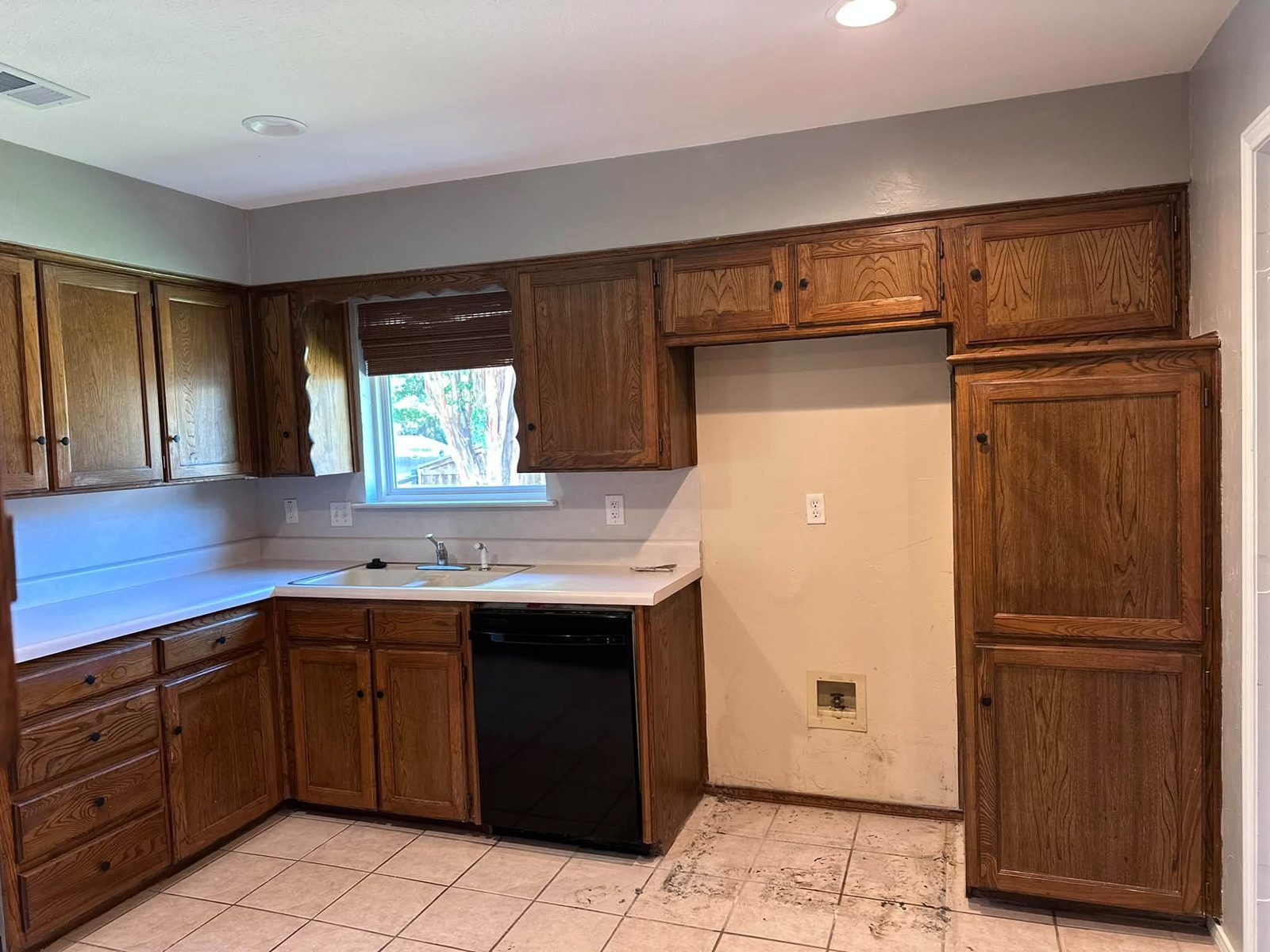
North side houses are one-story brick ranches on slabs with closed kitchens, small baths and a two-car garage, plus a share of 1950s houses near Main Street. The kitchen remodel takes the wall to the den out, sets an island, and runs cabinets to the ceiling. Moving the sink means cutting the slab for a drain. Kitchen remodeling covers the choices. Baths get a tub to shower conversion in the master and a tiled tub in the hall bath. See bathroom remodeling. Johnson Creek runs through this part of the city and flooded for decades before the Army Corps of Engineers straightened the channel in the 1980s, so the floodplain map matters for any addition near the creek.
South of I-20: Lake Ridge, Mira Lagos and Grand Peninsula
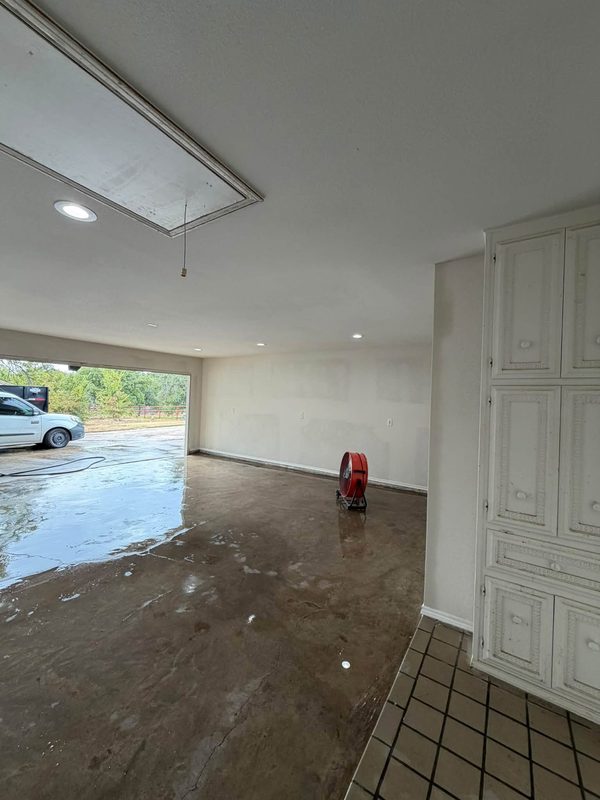
South side houses are two-story brick and stone production homes from the 2000s and 2010s with open plans, game rooms and three-car garages. Nobody there is moving a wall. The work is builder cabinets replaced or refaced, quartz counters, a vented hood, the garden tub swapped for a big shower, plank across the first floor, and the third garage bay turned into a gym or a bedroom. A garage conversion on one of these houses is mostly insulation, drywall, electrical and HVAC, because the slab and framing are already there. Many of these subdivisions have associations with exterior rules.
Permits in Grand Prairie
Residential permits in Grand Prairie come from the city's Building Inspections Division. Its residential permit list states that additions, accessory structures, decks, patios and porches, demolition, foundation repair, and all electrical, plumbing and mechanical work require a permit, under the 2021 International Residential Code. Applications go through the city's permitting and inspections self-service portal, and contractors register with the city before a permit is issued.
Flooring, Additions and the Entertainment District
Floors on the north side come out to the slab, which gets flattened before luxury vinyl plank or tile goes down. On the south side the slabs are newer and flatter, and the job is carpet and builder tile replaced with one plank through the first floor and new stair treads. Flooring over a slab covers each product.
Additions on the north side lots are usually a master suite or a covered patio off the back. On the south side it is the covered patio with an outdoor kitchen. Home additions covers both. Commercial work clusters along I-30 near Lone Star Park, which opened in 1997, the Epic Waters indoor waterpark next door and the EpicCentral district, and along Main Street downtown near the Uptown Theater. The Grand Prairie Chamber of Commerce is the city's business organization.
Other Dallas County Cities
Dallas, Irving, Garland. See the Dallas County page for the full list.
Recent Work
Kitchens, bathrooms and interiors across Dallas-Fort Worth.